The Kantō region is the broad area of eastern Japan anchored by Tokyo, stretching from coastal cities to mountain towns and smaller residential hubs. It’s home to Japan’s largest population center, but also to forests, hot spring towns, historic routes, and seaside communities—all connected by one of the most extensive rail networks in the world. It’s a region where daily life, history, and constant movement coexist.
After finishing my time in Nikko, I didn’t rush onward. Instead, I found myself slowly orbiting Tokyo, exploring the cities and towns that sit just beyond its dense core. Rather than staying anchored in one place, I moved in loose loops—following rail lines outward, then back again—letting each area reveal a different side of life around the Kantō region.
I started in Matsudo, a quieter residential city that felt grounded and local, far removed from the neon energy people associate with Tokyo. From there, I went to Shinjuku, using it as a familiar anchor point before heading west into the mountains and hot springs of Hakone. Hakone offered a deep contrast—steam, forested hills, volcanic landscapes—before easing back down toward the coast in Odawara, a city shaped by both the sea and the old Tōkaidō route.
Continuing south, I also spent time in Atami, in Shizuoka Prefecture, where the pace slowed even further. Perched along the coast, Atami felt like a nostalgic resort town—ocean views, steep streets, and the lingering presence of onsen culture. It was a gentle transition point between the mountains and the sea, and a reminder of how closely nature and daily life intertwine in this region of Japan.
What made all of this movement not just possible, but genuinely enjoyable, was Japan’s rail system. The trains are fast, frequent, and remarkably precise, turning what could feel like exhausting travel elsewhere into something almost effortless. Bouncing between cities doesn’t require planning days in advance or spending heavily—many of these trips are short, affordable, and seamlessly connected. Stations are intuitive, transfers are smooth, and even long distances feel manageable when you can rely on punctuality down to the minute.
Because of this efficiency, I never felt rushed or constrained. I could decide to change direction, stay longer, or loop back without friction. The rail network didn’t just move me physically—it shaped the way I traveled, encouraging spontaneity and making slow, exploratory movement not only practical, but deeply rewarding.
After looping back through Shinjuku, I settled briefly in Kawasaki, a city that often gets overlooked despite sitting directly between Tokyo and Yokohama. From here, I’ve been making relaxed day trips into Yokohama, enjoying its open waterfront, wide streets, and slower rhythm. It’s a refreshing counterbalance to Tokyo’s intensity—still urban, but with more air, space, and calm.
This stretch of travel wasn’t about chasing highlights or landmarks. It was about movement, proximity, and noticing how quickly Japan changes once you step just outside the capital’s center. Each stop felt connected, yet distinct—like different chapters of the same story, all unfolding along the rails.
As this loop through the Kantō region comes to a close, I’m slowing things down once again. I’m heading to Kamakura to rest for a few days—somewhere quieter, closer to the sea, and steeped in history.
After some rest, I’ll take a night bus to Osaka, leaving Kantō behind and beginning the next phase of the journey.
Before heading into Nikko, I made one last practical stop: a Mega Don Quijote. Knowing I’d be hiking and spending time in the mountains, I stocked up on essentials — snacks, drinks, and a few small items that always seem obvious only after you need them. I checked the weather again, and it looked promising for the weekend. Cold, but clear enough for walking.
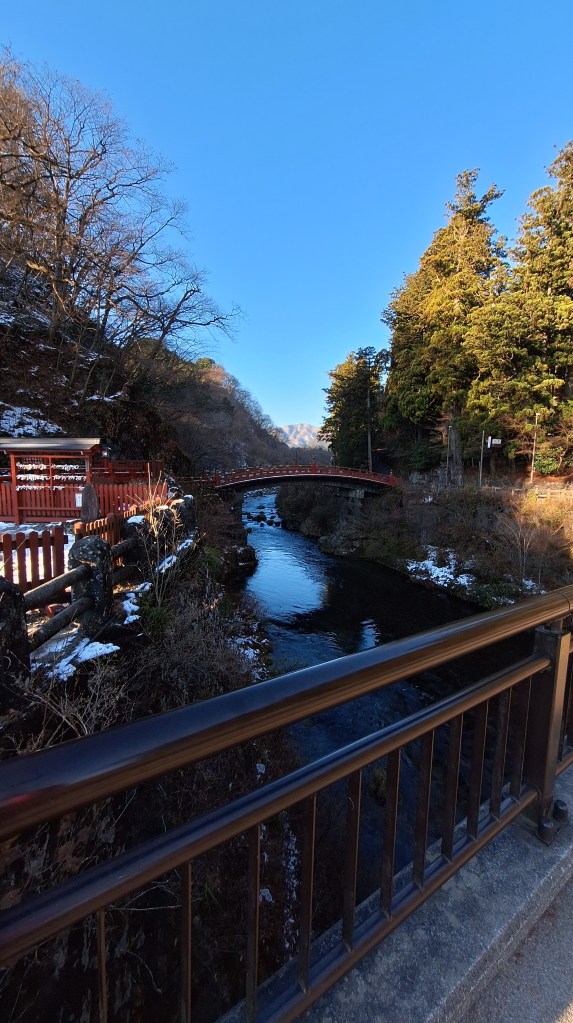
View of the Shinkyō Bridge (神橋) in Nikko
On December 5th, I took the train from Funabashi into Nikko. The ride itself felt like a transition — the city thinning out, concrete giving way to trees and hills. By the time I arrived, the air was sharper and cleaner. I checked into the Nikko Park Lodge, dropped my pack, and let myself settle in.
My first day in Nikko ended up being intentionally slow. I didn’t explore the town much at all. Instead, I eased into the place, chatting for a while with another traveler passing through from Vietnam. We exchanged stories, routes, and small travel philosophies — the kind of conversation that happens naturally when no one is in a rush.
That night, the cold set in quickly after sunset. I slept in my base layers, cocooned under blankets, listening to the quiet hum of the lodge.
Ancient Paths and Deep Forests
On Day Two, I checked the Nikko town website looking for routes that went beyond the standard tourist circuit. That’s when I discovered two ancient walking paths, once used by priests centuries ago. These weren’t just hiking trails — they were spiritual routes, walked repeatedly over generations by monks and ascetics moving between temples, mountains, and sacred sites.
I chose one of them: Takino’o Path, a wandering route that passes directly through a UNESCO World Heritage area. I started the morning walking toward Nikkō National Park, the town gradually dissolving into forest.
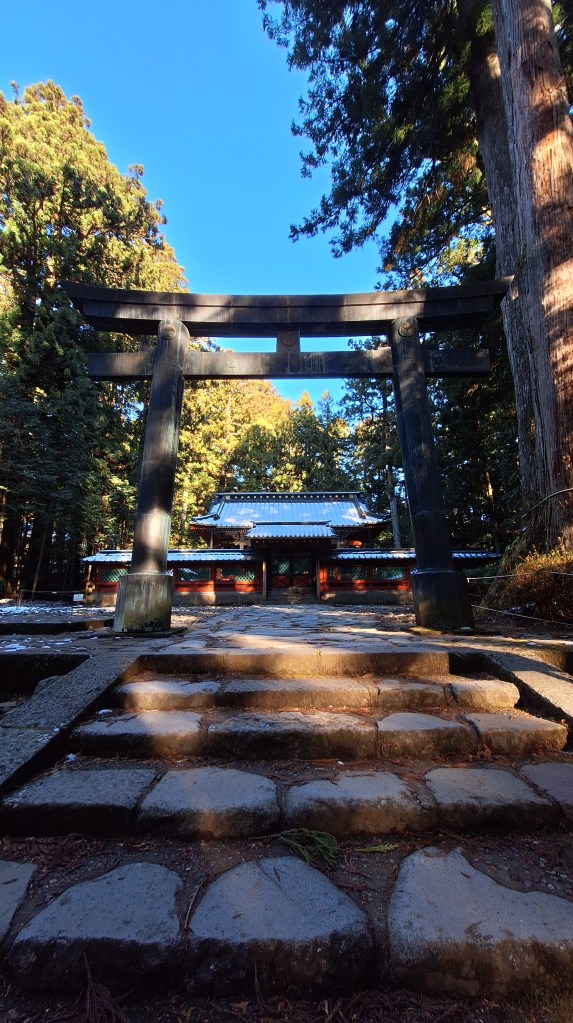
A hidden shrine close to the Tōshō-gū Shrine
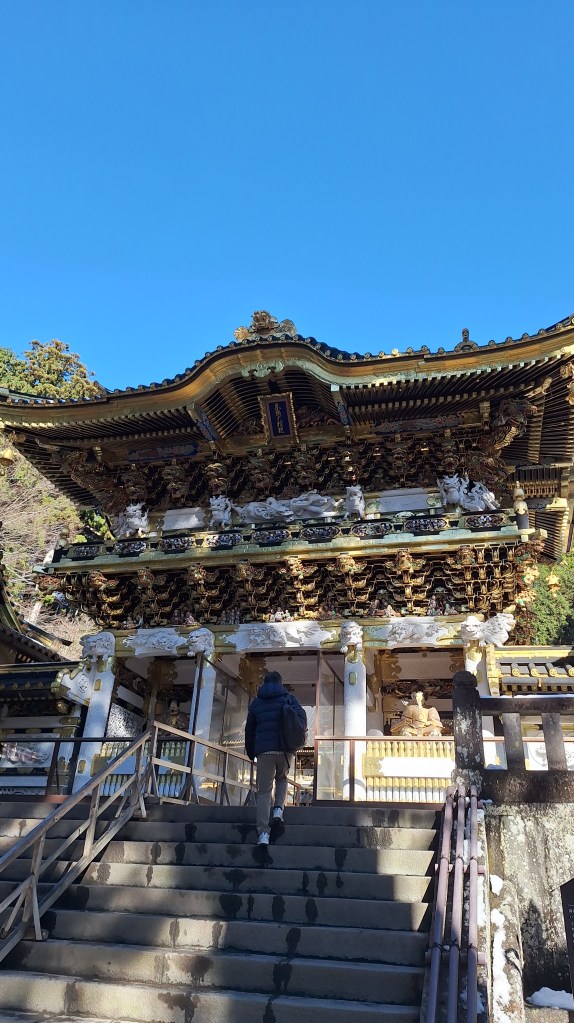
Before committing fully to the trail, I spent a couple of hours at Tōshō-gū Shrine, one of Japan’s most ornate and significant World Heritage sites. The craftsmanship was overwhelming — layers of carved wood, gold detailing, mythical creatures, and symbolic imagery everywhere I looked. It felt less like visiting a shrine and more like stepping into preserved ancient Japan, where devotion and artistry were inseparable.
The exquisitely decorated Yōmeimon Gate (陽明門)
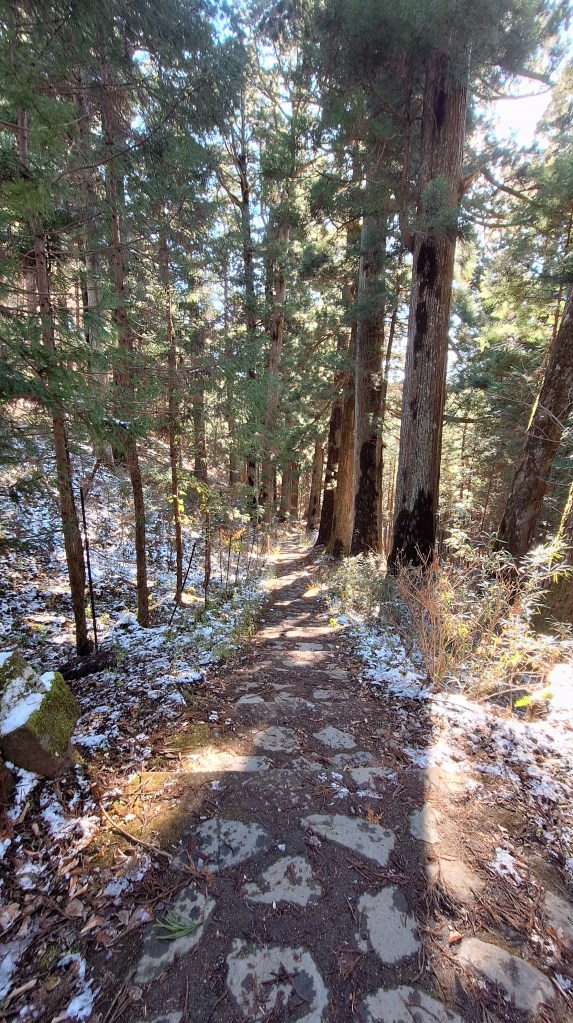
By late morning, I returned to Takino’o Path and headed deeper into the forest. Almost immediately, the atmosphere shifted. The noise of people faded, replaced by wind in the trees and the rhythm of my own steps. This part of Nikko is a deep pine forest, tall and solemn, with trees rising like pillars in a natural cathedral. The air was cooler, heavier, and still.
The ancient forest of Takino’o path
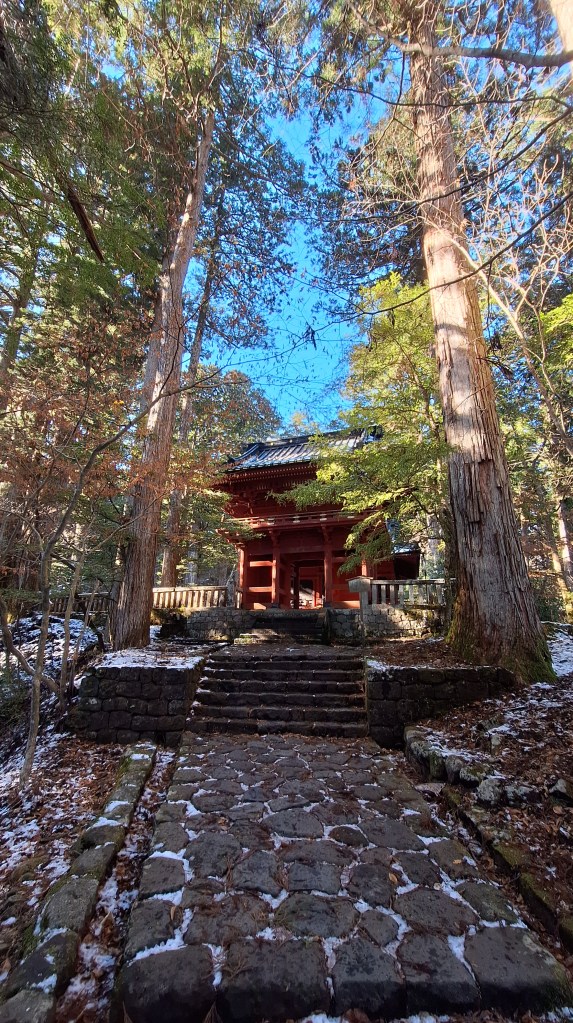
Surrounding Takino’o shrine, the forest became breathtaking. Snow fell gently from the pine branches, drifting down in soft bursts. White snow contrasted against dark, moss-covered wood; rich green pine needles cut through the quiet; and the deep red of the shrine stood vivid against the muted winter tones. It was a complete feast for the senses.
Takino’o shrine nested deep in the ancient mountain forest
Standing there, surrounded by silence and falling snow, I felt an overwhelming sense of gratitude — not just for the scenery, but for the chance to experience it slowly, without rush or distraction.
Day Three — Gorges, Bridges, and Reflection
On the third day, I set out on Kanmangafuchi’s Historical Walking Trail, the second ancient path in the Nikko–Tobu area. Compared to Takino’o path, this trail felt more open and dramatic. The path followed a striking abyss, where the land drops away to reveal rushing water below. Along the way, I passed several quiet temples and sacred structures that blended naturally into the landscape.
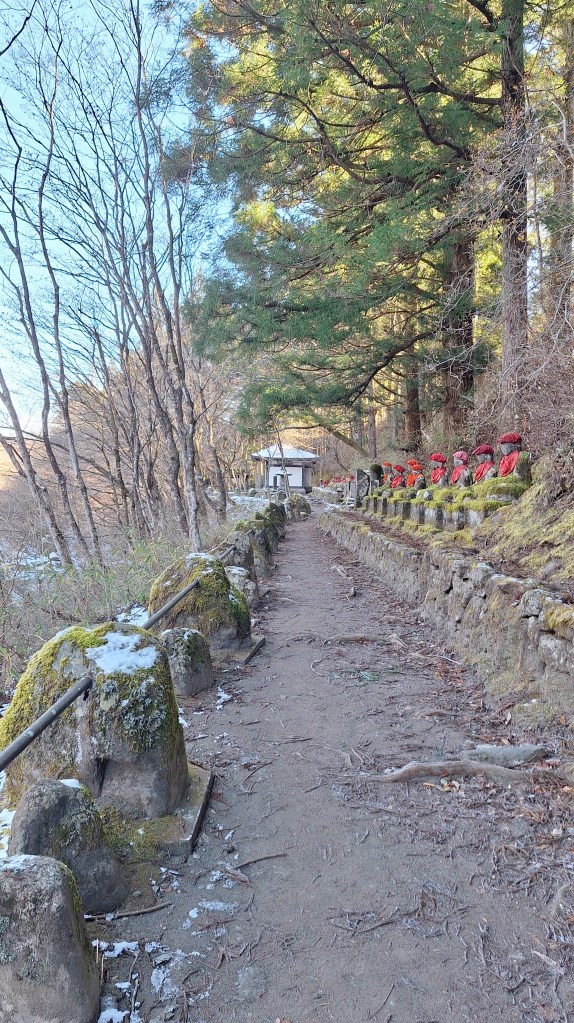
The path with resting stone monks with the abyss on the left.
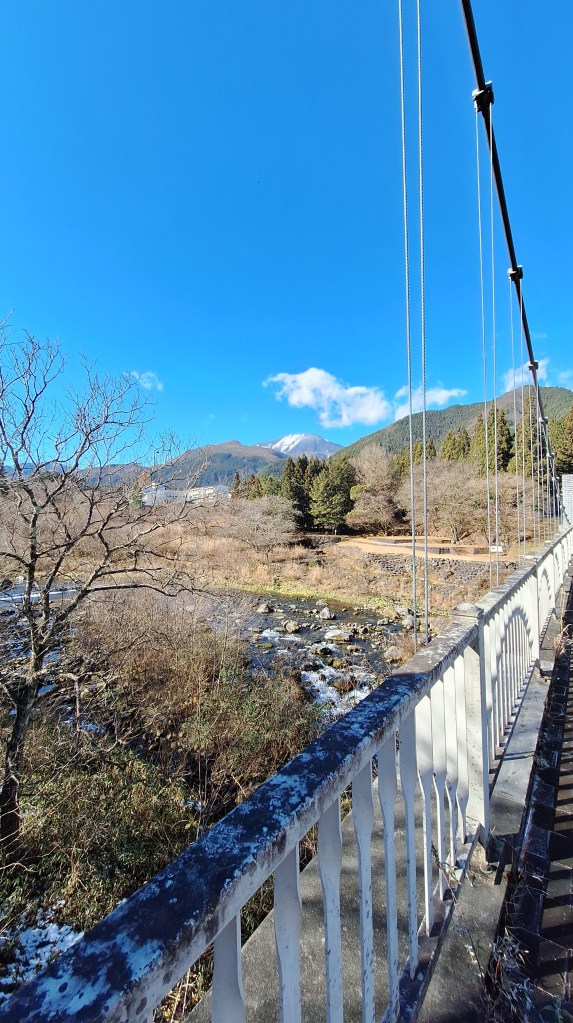
One of the highlights was Dai-ni-chi Bridge, offering wide, scenic views of the surrounding mountains. I rested there for a couple of hours, letting the cold air fill my lungs. I spoke with another traveler who had stopped to admire the view, and we shared stories while the mountains stood silently around us.
View from Nikko Dainichi Bridge (大日橋)
Sitting on that bridge, something quietly clicked. I realized that to live as a vagabond — to move intentionally through the world — there are two essential skills. The first is the mastery of self: knowing your limits, patterns, fears, and when to push or rest. The second is the mastery of letting go. Letting go of plans, places, people, comfort, and certainty. This reflects a core Buddhist teaching — that all things are impermanent by nature. Sitting there, impermanence didn’t feel heavy or sad. It felt freeing.
After hours of walking, my body was ready for warmth. I headed to a nearby onsen for a proper bath. The hostel I was staying in was simple and functional, but nothing compares to sinking into hot mineral water after a long day on foot. Muscles loosened, thoughts settled, and the day came quietly to a close.
Quiet Trails and Subtle Teachings
The common trails around Nikko were incredibly quiet. There were no flashy shrines or dramatic attractions — just nature revealing itself without effort. When I returned to the dorm that evening, it felt almost empty. With winter arriving, tourist numbers had clearly dropped. Instead of feeling lonely, I found the stillness comforting.
The next day, I walked Takano Shrine Path again, this time slowly, stopping often, allowing the trail to reveal itself without expectation. Familiar paths felt new when walked without urgency.
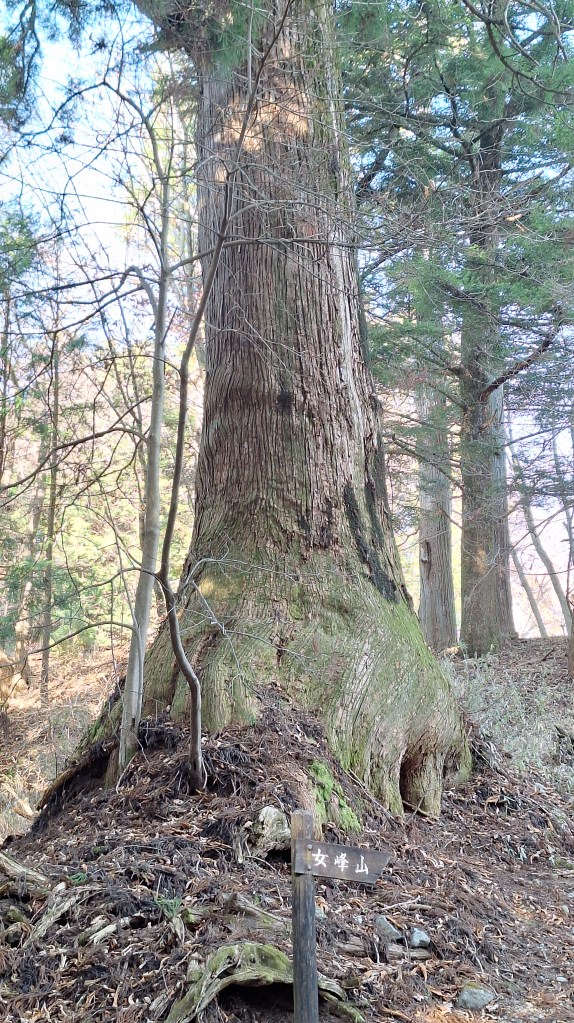
Many unique ancient trees dot the walking paths
It was during this time that I came to deeply appreciate Japan’s unique blending of Buddhism and Shintoism. Throughout Nikko — especially near shrines and along forested paths — stone lanterns appeared again and again. Along Takano’s Path in particular, they lined the trail like quiet guardians, weathered and softened by time.
What struck me most was how deeply decorated many of them were. The ancients had spent enormous care carving symbols, characters, and ritual markings into stone — work that would have taken countless hours, done slowly and deliberately. Originally, these lanterns served both practical and spiritual purposes: guiding pilgrims through dark paths, illuminating sacred spaces, and acting as offerings of light to the gods and Buddhas.
Now, centuries later, moss clings to their surfaces, softening the sharpness of the carvings and blending them seamlessly into the forest. They no longer feel like objects placed into nature, but like something that grew there alongside the trees.
While I was in Nikko, I noticed a shift within myself. I felt less like a traveler collecting experiences and more like a student of life itself — open-minded, observant, and eager to learn. Obstacles became lessons. When you stop reacting and start observing, patterns emerge. Things begin to make sense on their own.
Somewhere along that walk, I realized there was more to explore — higher up, deeper into Nikko’s interior. The mountains felt like an invitation.
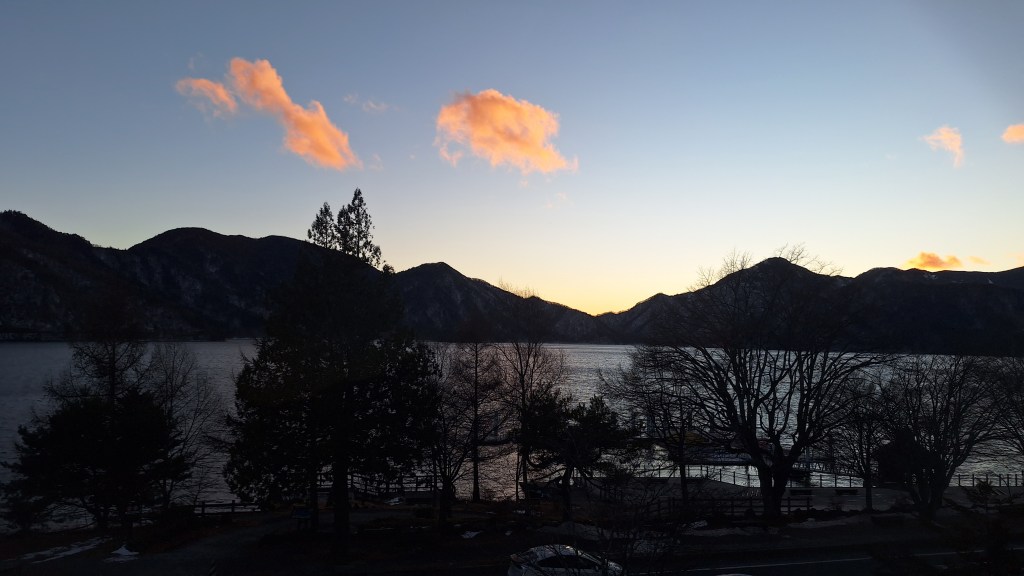
I checked out, packed up, and booked a stay near Lake Chūzenji, ready to continue the journey upward.
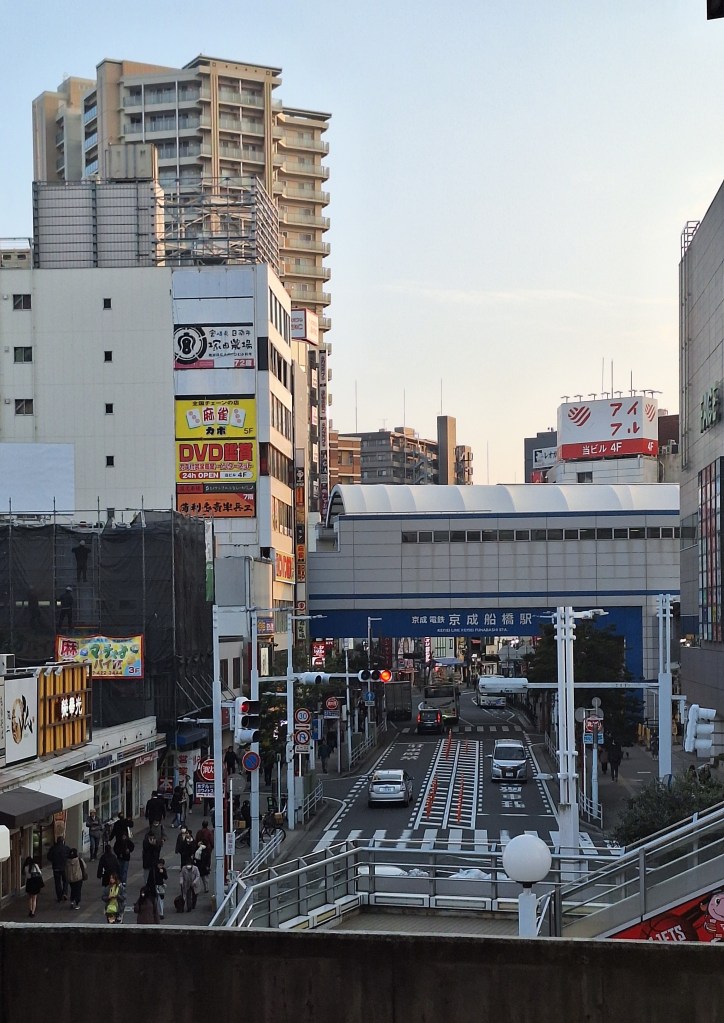
After leaving Narita, I made my way toward Funabashi, where I had booked a capsule hotel. At least, that’s what I thought. When I arrived at Funabashi Station, I realized I had the right capsule hotel company — just the wrong location. My reservation was actually at Nishi-Funabashi, not Funabashi Station.
Funabashi JR (Japan Rail) Station
It felt like a silly mistake at first, but it ended up being one of those travel missteps that turns into a blessing. Nishi-Funabashi had a quieter, more residential feel. It was calmer, less hectic, and surprisingly full of great food options. Japan builds much of its life around train stations, so anywhere there’s a station, there’s a cluster of restaurants, cafés, convenience stores, and little surprises tucked into side streets. I dropped my bags and just started wandering.
Japanese capsule hotels are clean, neat, and very efficient
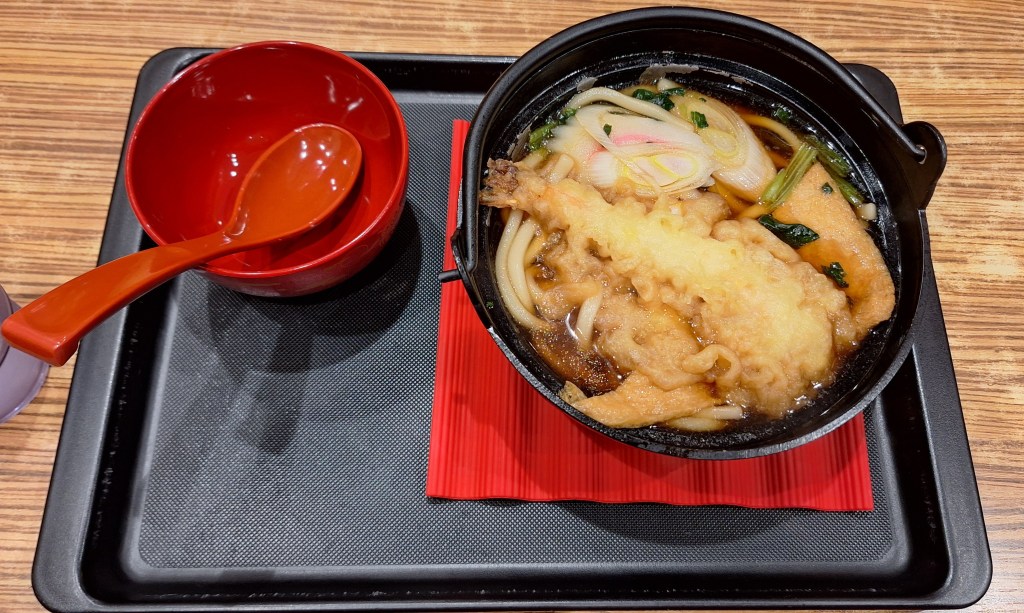
One thing I loved right away was how I allowed myself to play with the day. I didn’t force myself into a schedule or obsess over what I “should” be doing. I just explored and let whatever came my way unfold naturally. That mindset took me to a nearby neighbourhood called Shin-Koiwa (新小岩), where I found some great local restaurants. That’s where I tried Fuji Soba, a chain I’d seen before but never entered. Their udon blew me away — especially the Nabeyaki Udon, served piping hot in its own little pot. I even broke down the name while I ate: nabe (pot), yaki (cooked), udon (thick noodles). Simple, comforting, and surprisingly educational.
Nabeyaki Udon – a delicious and hearty meal
Mornings in Nishi-Funabashi became something of a ritual for me. I’d walk around the station, watching the flow of commuters heading off to work. One thing I noticed immediately was how people wear their backpacks on the front while riding trains. It’s a small courtesy, but one that says so much about the culture here. The more I observed, the more I saw how Japan functions on this deeply ingrained collective mindset. Everyone understands their small role in a much larger structure, and they take pride in performing it well. Train cleaners moving with precision, conductors carrying themselves with ceremony — each person doing their part with care, discipline, and a desire to contribute to the whole.
One of the biggest highlights of my time here was visiting my first onsen. I found it while wandering around Funabashi — a traditional Japanese bathhouse where everyone is completely nude. Coming from the West, it felt unusual for about two minutes, and then it became the most natural, relaxing thing in the world. Before entering any bath, you sit down and wash yourself thoroughly, which feels like a cleansing ritual.
I also learned you’re supposed to bring your own towel, which I definitely did not do the first time. So after soaking, I just sat in the sauna and let the heat slowly dry me off. Honestly? It worked out perfectly.
Since I couldn’t read Japanese, I didn’t understand any signs, so I examined the rocks to figure out what kind of bath I was stepping into. Some tubs had corroded stones — acidic water. Others had rocks coated with salt — salty baths. My favourite was the Shigaraki yaki clay pot bath, followed closely by the carbon dioxide bath that covered your skin in tiny bubbles. There was also a cold spring-water bath outside, and I happened to be soaking in it during sunset. Steam rising from the other pools and the sky glowing orange — it felt like time slowed down just for that moment.
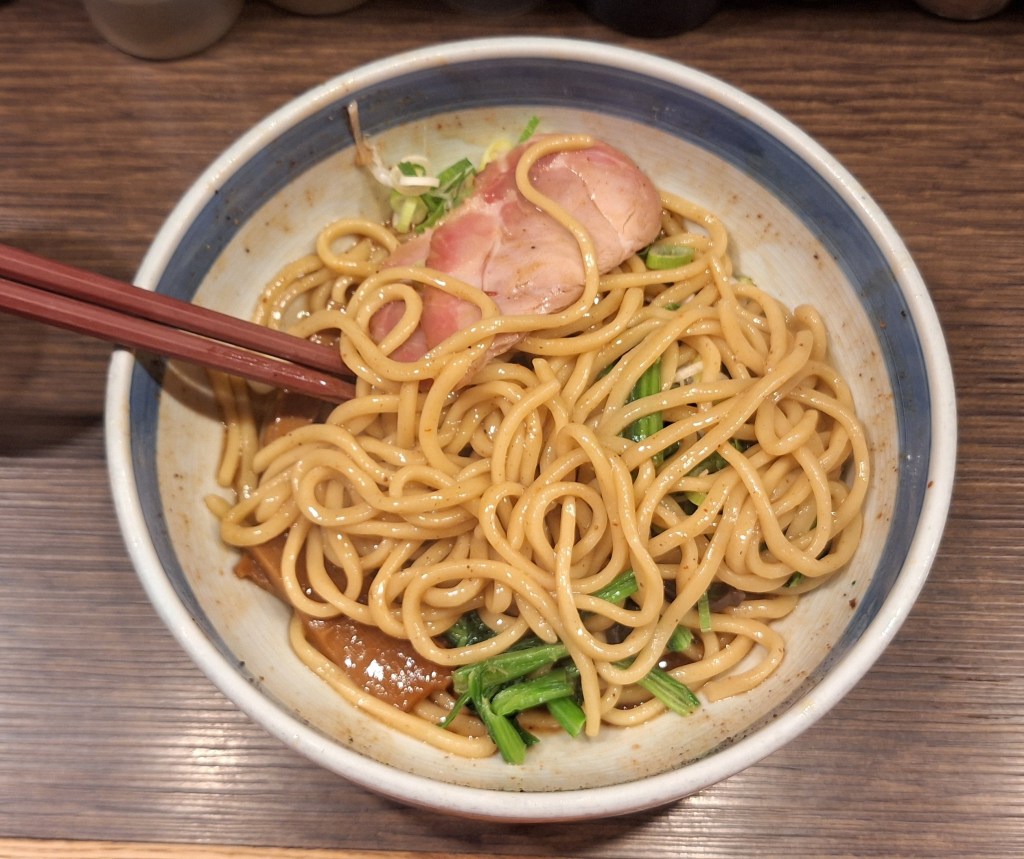
I stayed in Nishi-Funabashi for about three days and fell into a nice rhythm. My favourite onsen was Hōten-no-Yu, a beautiful mix of indoor and outdoor baths. I explored the maze-like aisles of Don Quijote, Japan’s massive mega-store that sells literally everything. And at Funabashi Station, I found one of Japan’s greatest culinary secrets: the cramped little ramen shops where the seats are packed close together, the chefs behind the counter have years of experience, and the food tastes absolutely incredible.
Abura soba from a tiny hole-in-wall shop near Funabashi Station.
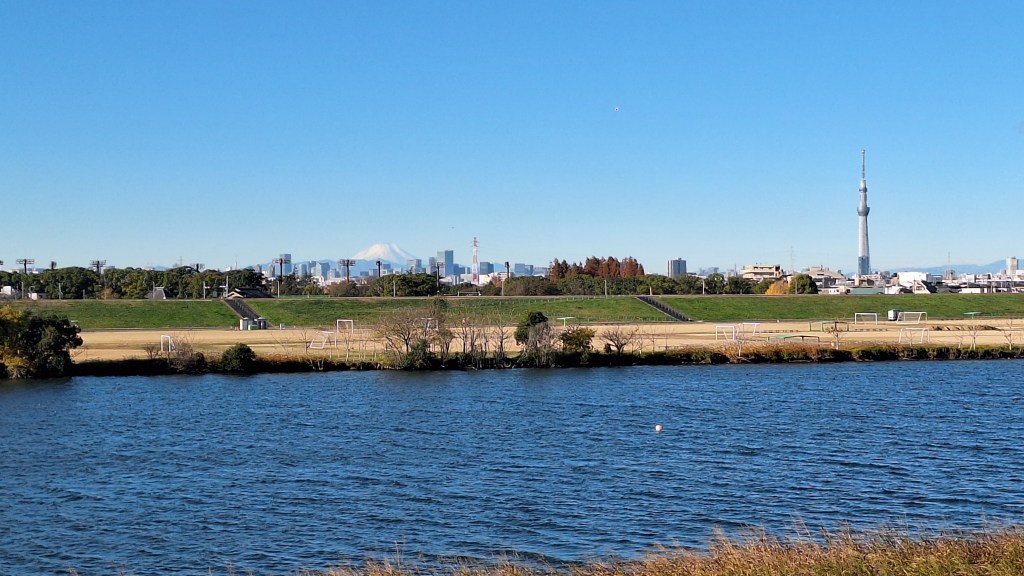
I also tried red bean takoyaki for dessert — surprisingly delicious — and took slow walks along the Edo River, watching the water drift by while the noise of the city faded behind me.
View from the Edo river, both the majestic Mt Fuji and the Tokyo Skytree are visible on a clear day
Those few days weren’t planned out or full of big attractions. But they grounded me. They eased me into the pace of Japan — the food, the trains, the rituals, the small daily moments. By the time I checked out of the capsule hotel and headed toward Nikko, I felt ready, settled, and excited for the next chapter of the journey.
A quiet three-day stop in a small town most travelers only pass through
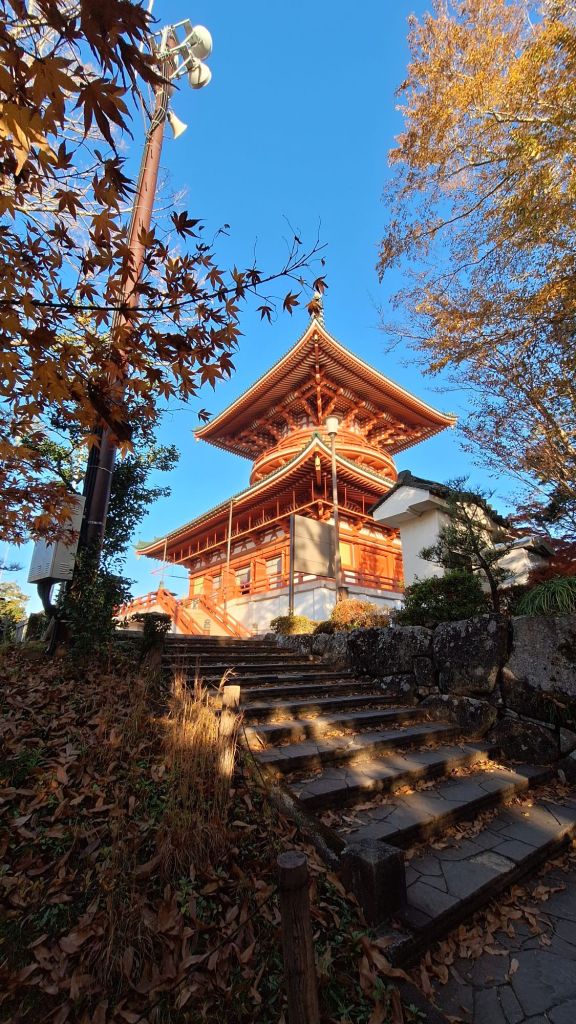
Great Pagoda of Peace – Narita 平和大塔
When most people hear the name Narita, they think of the airport — the giant international gateway where millions of travelers pour into Japan each year. But just ten minutes away sits Narita the town: a small, peaceful place shaped more for local Japanese tourism than for international visitors.
I spent three days here, long enough to understand its structure, rhythm, and quiet charm. Narita almost feels like three small towns stitched together.
On one side is the residential area, calm and lived-in — narrow streets, low houses, families on bicycles, and the soft hum of everyday life. Nothing flashy, but deeply peaceful.
To the east of the JR and Keisei train lines is the modern town core, centered around a shopping mall and everyday stores. It’s practical and functional, the kind of place where locals run errands and school kids grab snacks, not a tourist hotspot.
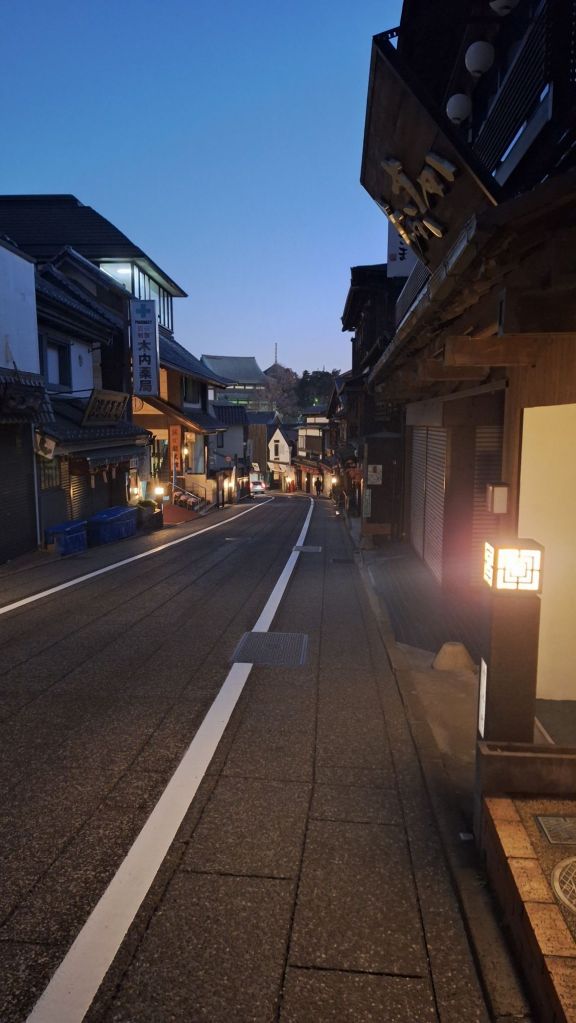
But cross to the west side of the tracks, and the character of the town changes completely. This is where Narita hides its real charm: the Old Walking Street and the Tourist Center. The wooden storefronts, traditional craft shops, and old-style eateries offer a glimpse into what a Japanese town might have looked like long ago — narrow facades, warm lanterns, and a feeling of preserved history. It’s gentle, authentic, and not overly commercial despite being a tourist area.
Narita walking street
Food, drink, and old-town atmosphere
The Old Walking Street is lined with restaurants and bars, mostly catering to Japanese tourists visiting the temple. From cozy izakaya to traditional rice shops and grilled eel stores, the entire street has a warmth that makes you slow down, look around, and just enjoy the simple charm of old Japan.
Walking down that street leads naturally to the spiritual heart of the town.
Naritasan Shinshoji Temple and the vast park beyond
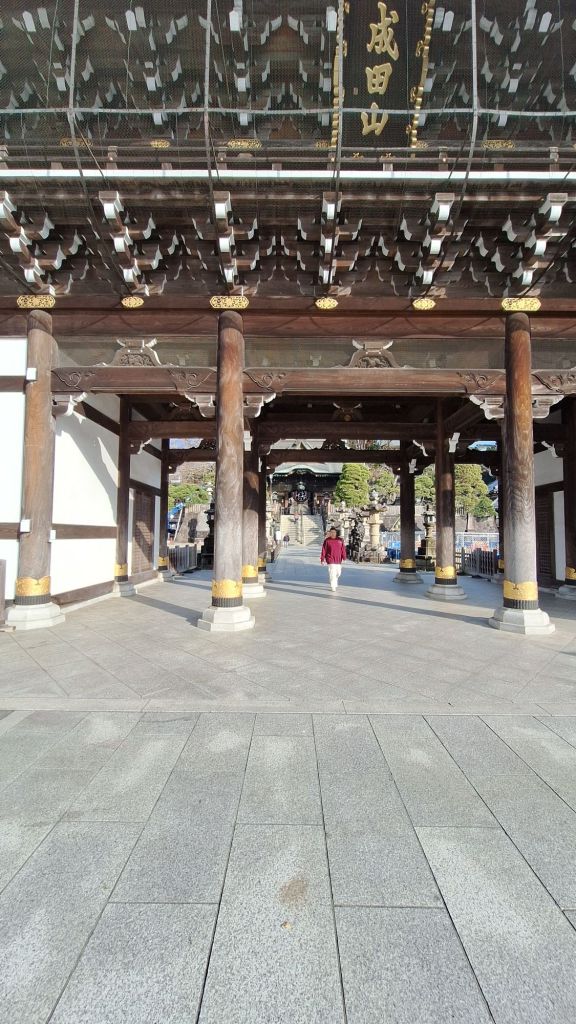
Naritasan Shinshoji Temple Main Entrance
At the end of the street stands Naritasan Shinshoji Temple, a massive Buddhist temple complex with grand gates, pagodas, and centuries of history. Behind the temple lies Naritasan Park, an unexpectedly vast nature area covering roughly 165,000 square meters — about 3.5 times the size of Tokyo Dome.
The park rolls across ponds, small waterfalls, forested slopes, and quiet walking paths. It feels like stepping into a pocket of Japanese countryside that somehow exists inside a town built beside an airport.
Sunrise view from Great Pagoda of Peace
Sunrise walks and discovering the Japanese maple
Because I flew in from Canada, jet lag had me waking up before dawn. Unexpectedly, those early mornings became one of the best parts of my stay.
Every morning, I wandered into the park before sunrise. In that soft, golden hour, I started to notice something I had never truly compared before: the Japanese maple.
Japanese maple trees are more refined, intricate, and varied in shape compared to Canadian maple trees. Each leaf is smaller but just as vibrant, and because the leaves grow densely along slender branches, the entire tree looks like a burst of color — delicate yet intense. Combined with its thin trunk and elegant branching, the Japanese maple truly looks oriental, almost like a tree shaped for art, temples, and reflections.
Japanease Maple tree in Narita Park in autumn.
Standing beneath them as the sun rose was like being inside a painted landscape.
Wildlife, peaceful streams, and the gentle life of the park
What struck me most was how alive yet peaceful the park is. It’s immaculately maintained, with clean paths and perfectly placed stones, but the wildlife brings its own personality.
In the mornings, the air is full of birdsong and the deeper, echoing calls of the large black crows that perch on treetops. Their sharp beaks and glossy feathers look intimidating, but they interact surprisingly playfully with the smaller birds around them.
In the evenings, stray cats appear — shy, curious, and often perched in the large trees. They follow visitors with slow blinks and tail flicks, turning the park into something that feels both mysterious and cozy.
The koi pond became one of my favorite spots. I would sit there listening to streams trickling over rocks, watching koi glide in slow circles. Some crossing paths let you skip across stones over flowing water — a small childlike joy that made me feel present and alive.
Narita Park Koi Pond
A rest stop that became a quiet love letter to Japan
Narita wasn’t supposed to be a destination. It was just meant to be a place to rest for a couple of nights, recover from jet lag, and move on to Tokyo.
But instead, in just 24 hours, this small town surprised me. Its charming streets, its temple, its peaceful park, and its quiet, everyday atmosphere made me think:
I love Japan.
And it all started here — in Narita, a town most people pass by without noticing.
The day of my departure to Tokyo, Japan is quickly approaching, and over the past month, I’ve been preparing myself for a longer journey across Asia. Unlike a short vacation, long-term travel takes a lot more planning — not just booking flights and packing bags, but making sure everything is in place for months to years on the road. From sorting out visas and getting the right vaccinations to deciding what to pack, these early steps set the foundation for the adventures ahead.
The first step in getting ready for my long trip through Asia has been figuring out the visa situation. Before anything else, I made a list of the countries I plan to visit: Japan, Taiwan, Vietnam, Cambodia, Thailand, Malaysia, Indonesia, and China.
Once I had the list, I compared the visa requirements for Canadians. Most of these countries are surprisingly easy — Canadians can either enter visa-free or get a visa on arrival for short stays. The only country that stands out with a more involved process is China, which requires a pre-approved visa for tourism.
So, that’s where I started. I’ve been gathering the necessary documents — things like my travel itinerary, flight details, proof of accommodation, and photos — all part of the checklist for the Chinese visa application. It feels good to begin with something concrete, and sorting out the visas is giving me a clearer picture of how my route will unfold.
Health Preparations and Immunizations
The next stage of preparation involved several visits to the doctor and immunization clinics. Having traveled through parts of Asia before, I’m already aware of some of the illnesses present in the region. For long-term journeys like the one I’m about to embark on — especially since I plan to spend time in rural provinces and countryside areas— getting properly immunized is an important step.
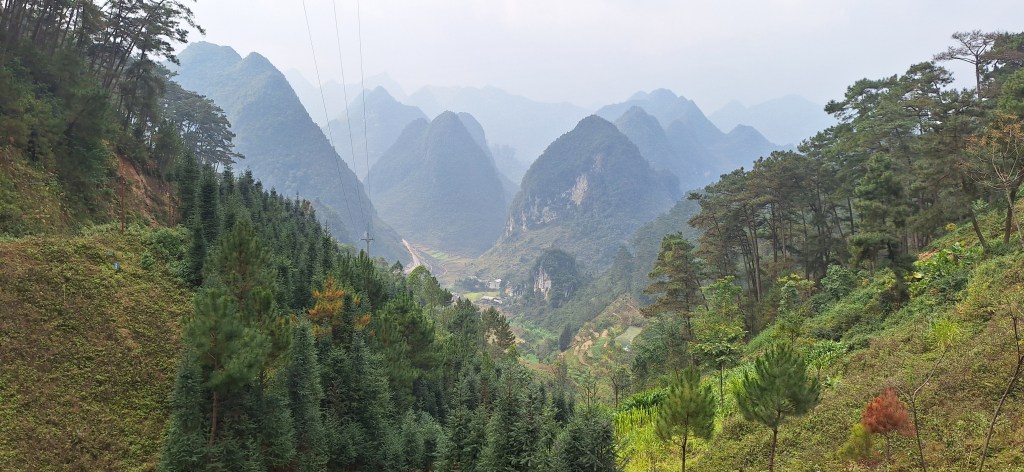
Đồng Văn, Vietnam — a remote district in Hà Giang province, nestled deep in the northern mountains of Vietnam. The rural countryside often reveals the most stunning and authentic beauty of a country, even if it takes more effort to get there. Image taken on Jan 4th 2025 during my 5 day journey through the Hà Giang province.
The Government of Canada’s travel advisory website provides a detailed list of diseases and health risks for each country. I highly recommend going through this list for every destination and assessing your personal risk. Another great option is visiting a travel immunization clinic, where you can speak directly with a healthcare professional about recommended vaccines.
The consultation fees are usually under 100 CAD, and in my experience, they’re well worth it for peace of mind and proper guidance. Since I had already visited an immunization clinic before my earlier trip to the Philippines, I was mostly up to date. This time, in preparation for this longer journey, I visited my family doctor and asked for a prescription for a food poisoning vaccine to round out my protection.
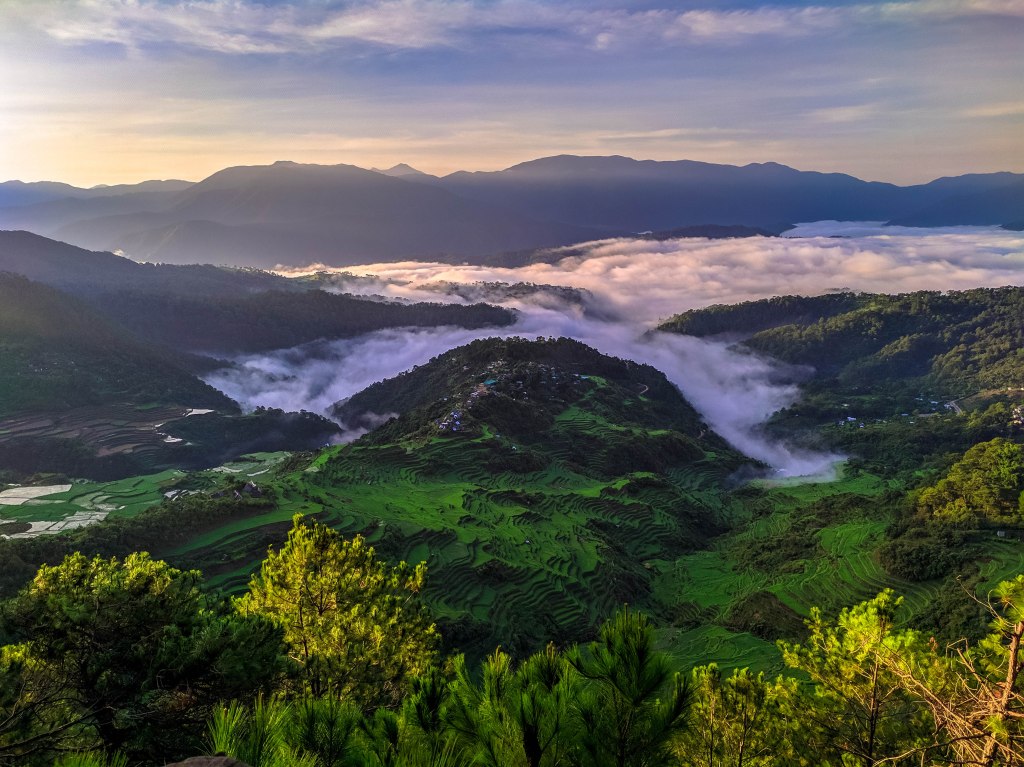
Food poisoning is often taken lightly, but it shouldn’t be. During my time in the rural mountain provinces of the Philippines, I experienced a severe case that left me in and out of consciousness for a couple of days. The culprit was an improperly prepared etag sandwich — etag being a traditional salt-cured and air-dried pork from the Cordillera mountain region. It was a harsh reminder that authentic local foods can pose real risks if not handled properly. That experience made me more cautious and more prepared for future travels.
The Maligcong Rice Terraces, located in the Cordillera mountain region of the Philippines. The view was absolutely worth it — even though this was where I experienced a serious bout of food poisoning. That moment taught me to be more cautious with local foods and ultimately led me to get a food poisoning immunization before my upcoming trip. Image taken by Lemuel Salibio and uploaded on Wikipedia.
Packing Light for Freedom
When it comes to packing, I’m a firm believer in keeping things as light as possible. For this trip, I’m bringing just one hiking backpack and one gym bag — the same setup I used while traveling across Vietnam. I generally keep the gym bag at the hostel I’m staying in and use the hiking backpack as a day pack for whatever adventure I get up to. I find this system works out nicely — it keeps me organized and ready to move at a moment’s notice.
Many first-time travelers feel anxious about forgetting something, but over time I’ve learned that almost everything you could ever need can be bought anywhere in the world. There’s no need to overpack for “what if” situations. Traveling light gives you the freedom to move — no heavy suitcases to drag through train stations or hoist onto buses.
I also recommend packing several extra medium-sized plastic bags. These become surprisingly handy for rotating clothes between a clean bag and a dirty bag. Every traveler has to manage their laundry at some point, and keeping dirty clothes sealed away from clean ones makes life on the road much easier (and cleaner).
In Asia, especially, packing light opens up even more possibilities. Being able to fit everything onto a motorcycle changes the entire travel experience. You can explore remote areas, hop on local buses without worry, and travel with a kind of freedom that just isn’t possible when weighed down by luggage.
Wrapping Up
The preparation phase before long-term travel is quite involved, with many moving parts to think about — flights, visas, health precautions, and packing. I’ll spend the next blog post diving deeper into the essential list of items I pack, partly because I’m still in the middle of it myself. Right now, my backpack is laid out on the floor, and every time I think of something useful, I just drop it into the bag. A few days before my departure, I’ll go through everything carefully, make adjustments, and add the final items.
I’ll also dedicate another post entirely to budgeting and financial preparation, since that’s another big part of getting ready — and one I’m still working through.
The journey hasn’t even begun yet, but already, the excitement is building.
Fall is in full swing here in Ontario, and I’ve really been soaking it in — the colors, the cool air, those quiet walks and bike rides where everything feels calm and alive at the same time. It’s one of my favorite times of year, and it also feels like the perfect moment for change.
Because… I’ve officially booked my flight to Japan! It still feels kind of unreal to say that. Japan will be my first stop before I head off on what I’m hoping will become a year-long backpacking trip through Asia. I’m planning to travel slowly, explore different cultures, and really take the time to experience life on the road.
I’m starting this blog to share some of that journey — not just where I go, but what I think about along the way. The little moments, the random thoughts, the people I meet, the new things I learn. I want it to be a place to document everything that comes with a trip like this — the excitement, the challenges, the insights, and the fun.
For now, I’m just enjoying the last bit of Ontario fall before everything begins. The next chapter starts soon — and I can’t wait to see where it leads.
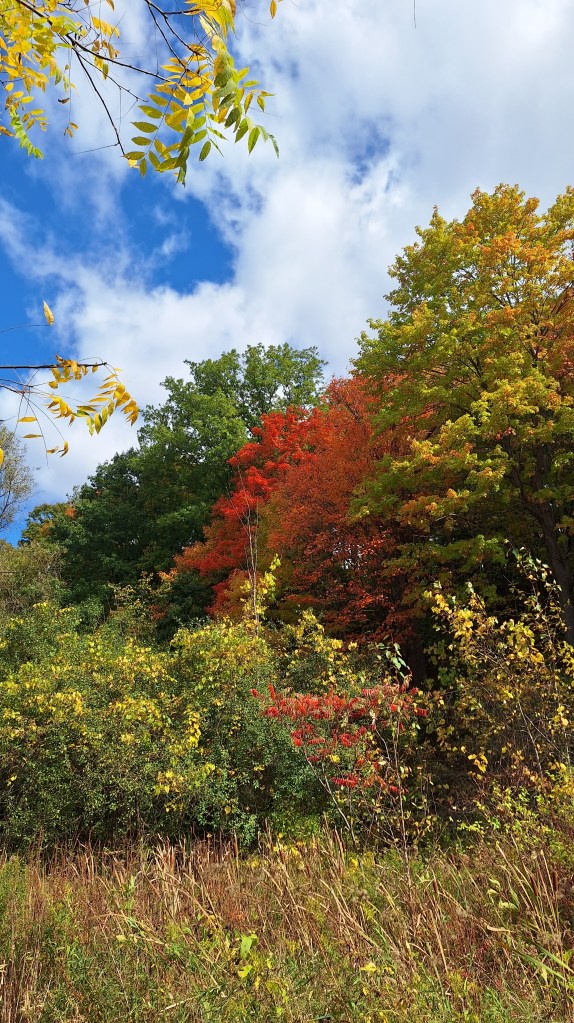
Here in Ontario, the first colors of fall are beginning to show. A staghorn sumac leans at the edge of the path, its branches tipped with red. Across the hills, the maples are shifting too—some already glowing a deep crimson, others just beginning to blush with lighter tones.
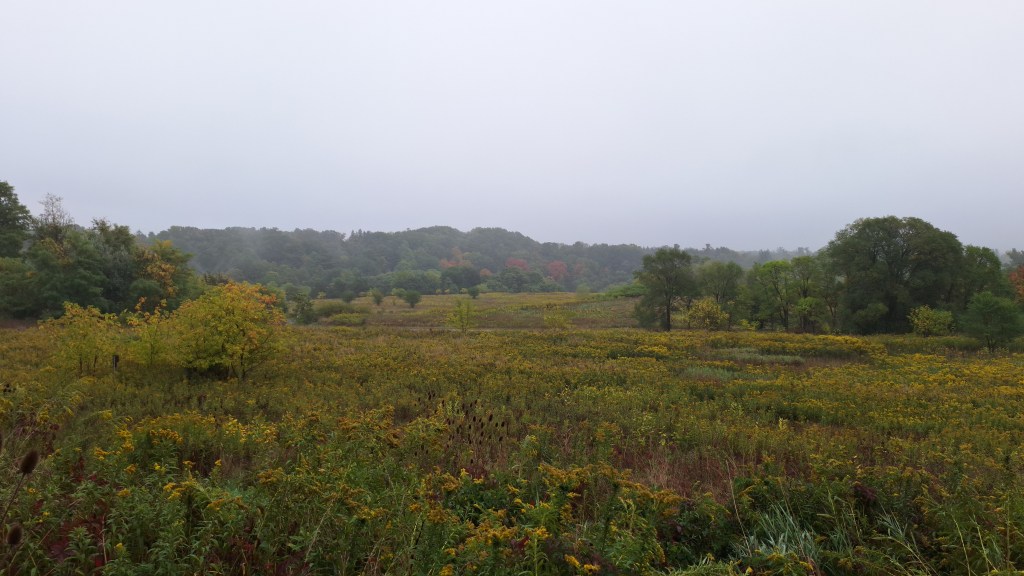
Today, rain falls softly, and a veil of fog hangs low over the land. At first glance, the mist makes the distant trees look faded, almost hidden. But the longer I look, the more details reveal themselves: a yellow tree shining like a lantern, a cluster of red leaves glowing faintly through the fog. Instead of standing apart, the colors blur and blend into the forest, becoming part of a vast, living mosaic.
Even the city itself feels transformed. In the distance, the tall towers of Toronto rise faintly above the treeline, half-swallowed by cloud and mist. The skyline seems to dissolve into the forest, reminding me how nature and the built world share the same horizon.
What strikes me most is how the act of simply looking—really looking—changes what I see. A quick glance shows me fog, rain, and shadow. But patience reveals infinite layers: the way wet leaves deepen in color, the curling edges of a branch, the delicate symmetry of sumac, the blurred silhouettes of towers beyond.
And this is what makes the fall of Ontario priceless. It is so intrinsically beautiful that it cannot be measured, bought, or sold. Its value is not in rarity or possession but in presence—the gift of being here to see it unfold.
It’s easy to rush through life, our minds leaping ahead to the next task or destination. But mornings like this remind me that beauty is endless, waiting in the quiet details. All it asks is that we slow down long enough to notice.
So, the first signs of fall are here in Toronto. I snapped a picture of a leaf today—it’s this deep red with veins of green still running through it. It looks like it was cut before the tree could drain out the last of the color. A perfect little herald of fall.
With the season changing, I’m planning my next trip. The big plan is Japan. I’ll probably start off in Tokyo, spend a week or two there, and then head south. I’d love to go north too, but that depends on the weather. Since it’ll be fall, I’m hoping for that sweet 10–20 degree range—perfect for walking around and exploring.
After Japan, most likely Southeast Asia. I’ll probably kick things off in Singapore, then Indonesia, Malaysia—just taking it slow and seeing where the road leads. Nothing’s set in stone yet, which honestly makes it more exciting.
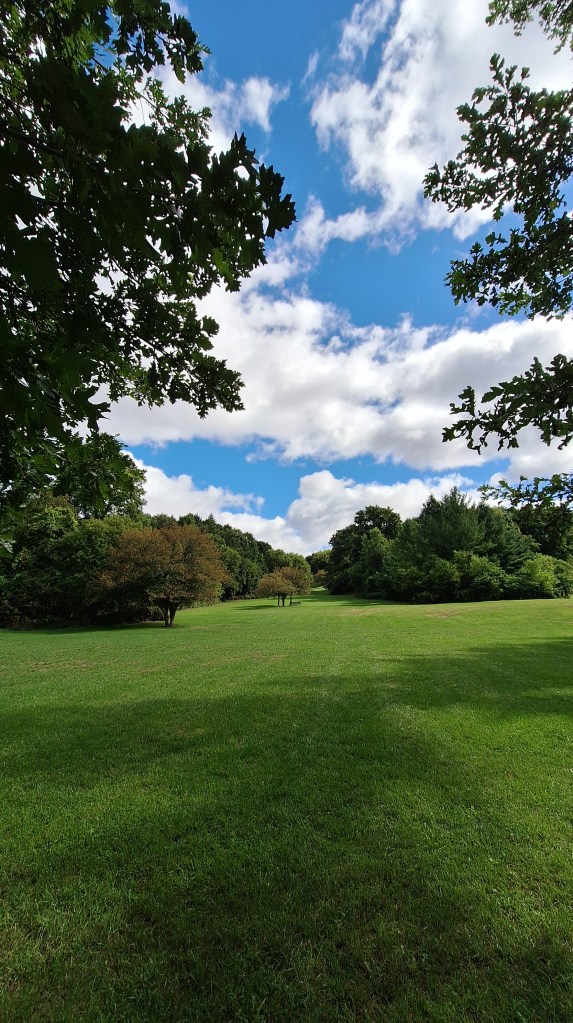
Yesterday’s rainstorm washed over Toronto, soaking the ground and refreshing the air. Today, the sky looks completely different—bright, blue, and full of enormous clouds drifting across the horizon. Standing in a wide green field, it’s hard not to be amazed by their sheer size and movement.
At first glance, the clouds look light and fluffy, like cotton drifting lazily overhead. But science tells a bigger story: these are cumulus clouds, the most familiar cloud type, and they’re far from small. A single one can easily be a kilometer wide and hold up to half a million kilograms of water. Even so, they float gracefully above us, forming and dissolving in an endless cycle.
After yesterday’s storm, the atmosphere is still balancing itself. Moisture left behind rises with the warming ground, cooling and condensing into the puffy shapes we see today. That’s why they appear as post-storm companions—not threatening rain, but proof that the air is still alive with energy.
What’s fascinating is that clouds don’t just roam across the land like ships in the sky; they’re also constantly being made and unmade. Theyform, shift, and evaporate as they drift with the wind, much like ocean waves moving forward even though the water beneath barely travels. What we call a “cloud” is never the same from moment to moment.
Looking up at them from Toronto’s open parks, it’s humbling to realize perspective. To us, the clouds are massive, but from far above, they’re just fleeting patterns in the air. In the same way, we might feel small in the grand scheme of things—like tiny dots under the sky. But just as each cloud is unique, each of us carries something amazing within.
Toronto’s skies remind us: size doesn’t determine significance. Even the smallest dot on the ground can be as remarkable as the biggest cloud overhead.
Ontario is my home, and in the summer it is incredibly beautiful. I feel lucky to live near a conservation area, with easy access to forests, meadows, and trails. No matter how many times I visit, I always find myself in awe of the diversity and quiet beauty of nature. Over the last few days, I set out on some adventurous walks, and here are a few things I encountered along the way.
A Curious Woodland Berry
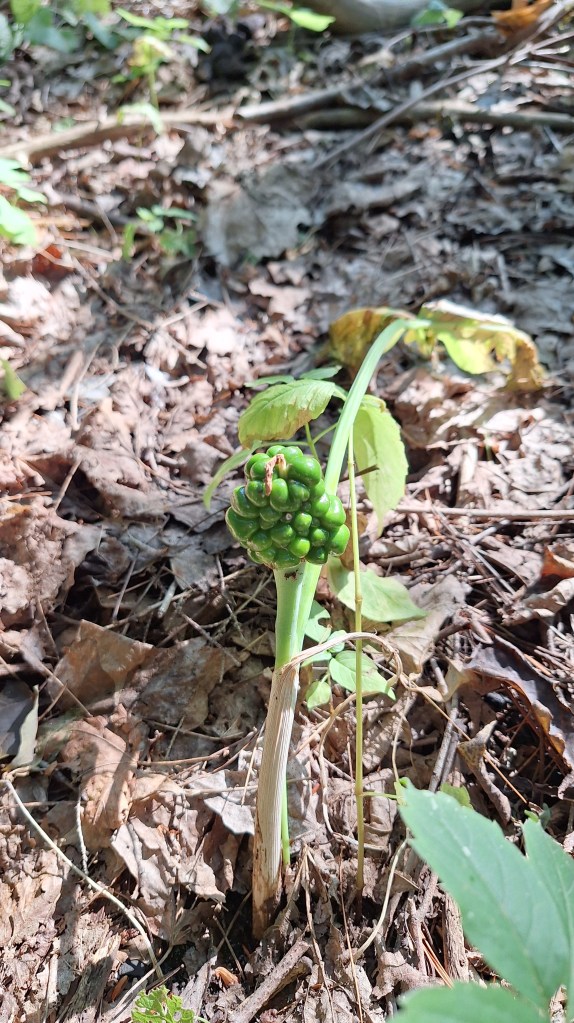
On one trail, I came across a cluster of unusual green berries. At first glance, they looked almost alien, but this plant is likely a Jack-in-the-pulpit, a native woodland species found throughout eastern North America.
Earlier in the season, Jack-in-the-pulpit is known for its striking hooded leaves and spadix (the “Jack” sitting in the pulpit). By mid-to-late summer, the plant puts its energy into producing fruit—tight clusters of green berries that eventually ripen into a brilliant scarlet red by early fall. I found this one growing in the shaded, damp soil of a meadow in the conservation area. Its leaves were beginning to yellow and wilt, but the vibrant berry cluster stood out like a beacon against the green forest floor.
A Walnut Tree with a Copper Glow
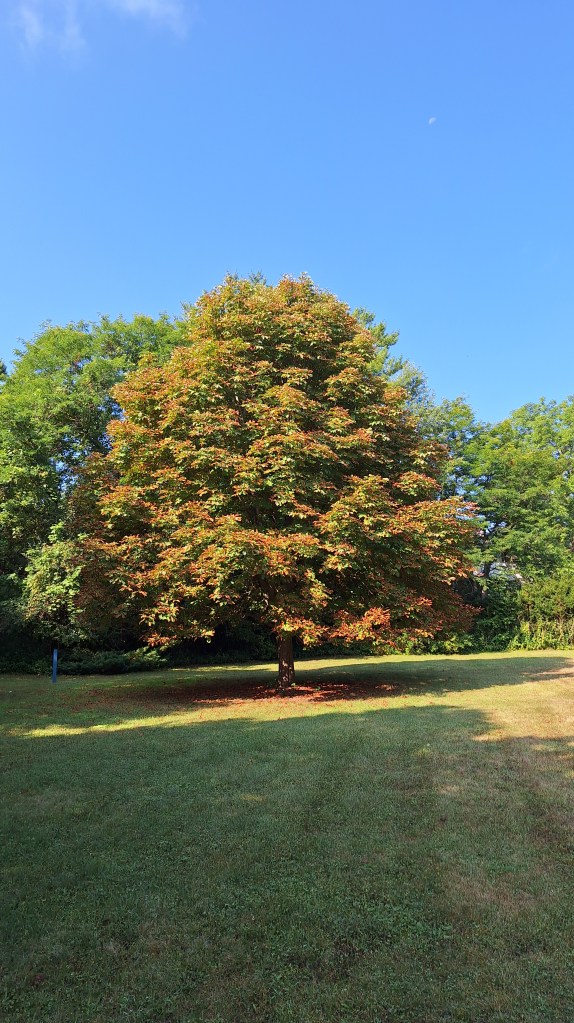
Not far from the meadow, I noticed a Black Walnut tree (Juglans nigra) shimmering with a surprising copper hue. Black walnut trees are common in Ontario, easily recognized by their tall, spreading crowns, ridged bark, and large compound leaves. They are valued both for their edible walnuts and for their strong, dark wood, which has been prized in furniture making for centuries.
The tree I saw, however, had leaves that weren’t their usual deep green. Instead, they glowed with coppery, bronze tones. This unusual coloring was the result of Walnut Anthracnose, a fungal infection that thrives in humid, late-summer conditions. The fungus breaks down the chlorophyll in the leaves, revealing yellow and rust-colored pigments beneath—much like the early onset of autumn.
From a distance, the tree looked like it was aflame, glowing warmly against the backdrop of green forest. While walnut anthracnose rarely kills mature trees, it can cause leaves to drop early and weaken the tree over time. So even as this tree was fighting a fungal infection, its shimmering copper glow made it more inviting than usual.
A Tiny Master of Disguise
I spotted a small, almost invisible insect perched on a leaf. This was a Leafhopper, part of the Cicadellidae family, and likely a Buffalo Treehopper or a close relative.
Leafhoppers are tiny—usually less than a centimeter long—but they’ve evolved remarkable camouflage. Their bodies are shaped and colored to resemble leaves, complete with delicate vein-like patterns. This mimicry makes them nearly invisible when they rest on plants.
Camouflage: By looking like part of the leaf or stem, they can avoid being spotted by birds and other predators.
Diet: They feed by piercing stems and sipping sap with their straw-like mouthparts.
Behavior: True to their name, they can hop quickly if disturbed.
Although they rarely cause serious harm, in large numbers they can weaken plants by feeding on them. In Ontario, they are common throughout the summer and fall, hidden in plain sight among the greenery.
Closing Thoughts
Exploring my local conservation area reminds me that you don’t need to travel far to discover something new. Whether it’s a native woodland plant, a copper-glowing walnut tree, or a tiny insect master of disguise, Ontario is full of natural wonders waiting to be noticed.
Every walk feels different, and every small detail—from the shimmer of leaves to the sudden hop of an insect—tells a story about the rich ecosystems thriving here at home.



 Curious Travels